Best before vs use by date: what is the difference?
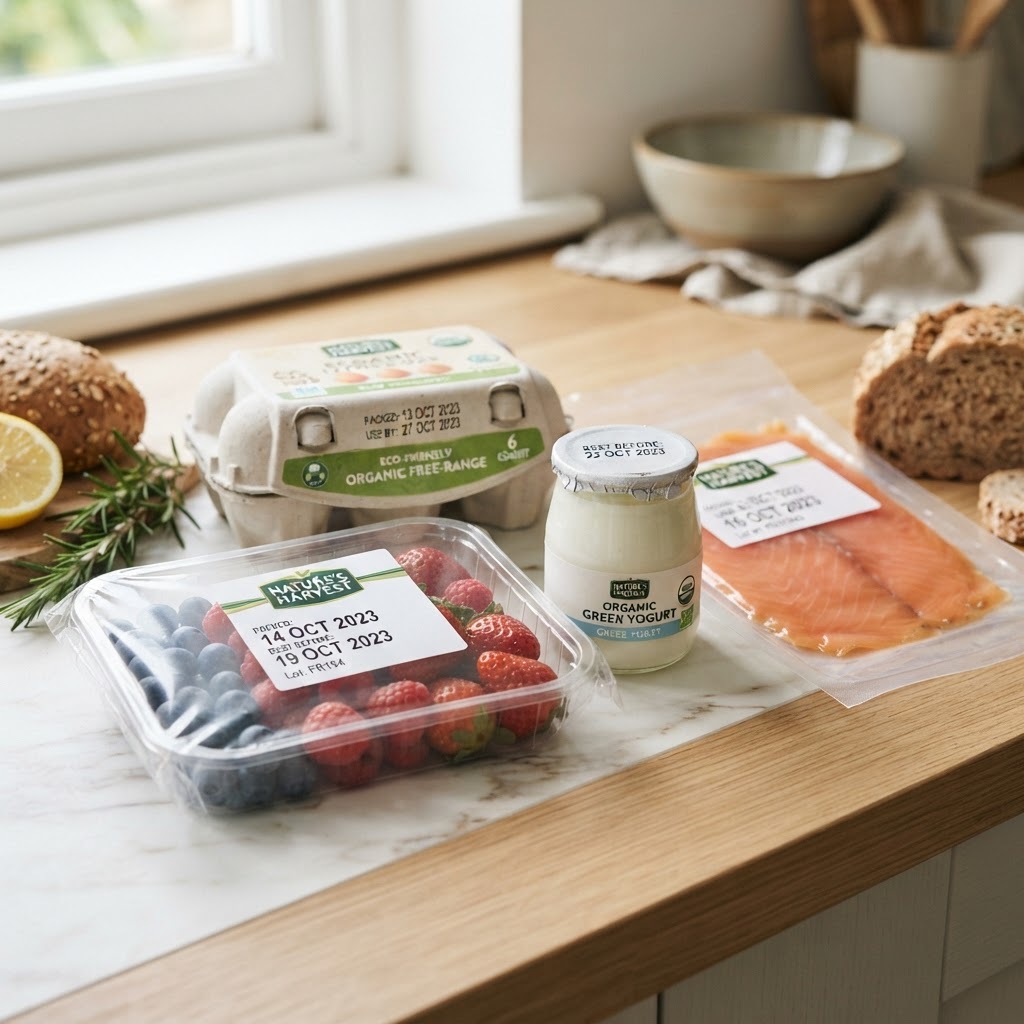
Food date labels help businesses and consumers make decisions about quality, safety, stock rotation and waste. The terms can look similar, but they do not all mean the same thing. In general, a best-before date indicates how long a food is expected to retain its intended quality when stored as directed. A use-by date is a safety deadline for certain highly perishable foods: the product should not be eaten after that date, even if it looks or smells fine.
Expiry date is often used informally as a catch-all, but its legal meaning varies by market and product. Sell-by and similar retail stock-management dates are generally intended for sellers, not as direct instructions for consumers. Always check the wording, product category, storage directions and rules that apply where the food is sold.
For restaurants, caterers, hotels, retailers and distributors, understanding labels is part of a wider food-safety system. Good purchasing, receiving, storage and stock rotation practices support safe service. Horeca 360 helps food businesses with food sourcing, product selection and food supply.
What do the main food date labels mean?
| Label | Typical purpose | Practical interpretation |
|---|---|---|
| Best before / best by | Quality guidance | Quality may decline after the date, but the food may remain safe if it was handled and stored correctly and shows no other safety concern. |
| Use by | Food-safety deadline for specified perishable products | Do not eat or serve after the date where local rules treat this as a safety date. Do not rely on smell or appearance to override it. |
| Expiry / expiration | Market- and product-dependent | Check the applicable law and label context; it may act as a safety limit, a quality date, or another regulated date. |
| Sell by | Retail stock rotation | Usually helps retailers manage inventory. It is not necessarily the consumer’s safety deadline. |
| Packed on / production date | Traceability or freshness information | Indicates when an item was packed or made; it does not, by itself, establish how long it is safe to eat. |
This table describes common usage, not a universal legal definition. A date’s meaning depends on local legislation, product type, wording and any accompanying instructions.
Is a best-before date a food-safety deadline?
Usually, a best-before date is about the product’s expected quality under the storage conditions stated on the package. After it, a food may lose crispness, aroma, colour, texture or flavour. Examples include dry pasta becoming less aromatic, crackers losing crunch, or a shelf-stable sauce showing a gradual quality change. A best-before date is not a guarantee that food will remain safe until that day regardless of how it has been handled.
Safety still depends on the product, packaging and storage history. A sealed, shelf-stable food kept in a cool, dry place is different from a package that has been opened, exposed to moisture, damaged or stored in excessive heat. Discard products with signs such as a swollen or leaking package, broken seal, unexpected mould, pests, unusual odour or evidence of contamination. When in doubt, do not taste the product to test it.
For food businesses, a best-before date does not replace hazard controls, supplier specifications or a documented stock-management procedure. Use a first-in, first-out system, inspect deliveries, protect packaging and follow the manufacturer’s instructions. For support with product sourcing and handling requirements, see Horeca 360’s sourcing services.
Does a use-by date mean food is unsafe the next day?
A use-by date is generally used for foods that can become unsafe quickly when kept beyond a validated storage period. Depending on local law and the product, this may include fresh meat, fish, ready-to-eat chilled foods and some dairy products. The date assumes the food has been stored as instructed, such as under refrigeration, and that the package remains in the stated condition.
Where the use-by date is legally a safety deadline, food should not be eaten or served after it—even if it looks and smells normal. Harmful microorganisms can grow without obvious signs. Businesses should not extend the date themselves or rely on cooking, freezing or repackaging to make an out-of-date product acceptable unless the applicable rules and validated process expressly permit it.
Always follow the label’s storage directions. If a product says “keep refrigerated,” a date printed on the pack does not make it safe after a period at room temperature. If the cold chain has been interrupted, assess the incident under your food-safety procedures and local requirements rather than assuming the printed date still applies.
How is an expiry date different from a use-by date?
“Expiry date” or “expiration date” can sound definitive, but the term is not interpreted identically around the world. Some authorities use a specified term for safety-related dating, while others distinguish between quality dates and safety dates using different wording. Certain products, including foods for special dietary or infant use, may have specific dating requirements.
Do not assume that an expiry date is interchangeable with best before or use by. Read the full label, identify the product category and check the rules in the country where it is marketed. For imported food, the original packaging may contain terminology from another jurisdiction; an importer label or local-language sticker may provide the legally applicable information.
What does a sell-by date mean for restaurants and retailers?
A sell-by date is commonly a stock-management tool used to help retailers display and rotate products. It may guide when a product should be removed from sale, but it does not necessarily tell a consumer when the food becomes unsafe. Other terms, such as “display until” or “best before,” may also appear for different purposes.
For HORECA operators, retail stock dates should never be confused with internal food controls. On receipt, record product details where required, inspect condition and temperature, and rotate stock according to your documented procedure. Once a package is opened or prepared, apply any required date marking for the opened or prepared food. Follow local rules for these secondary labels.
Why do food date-label rules differ by country?
Date marking is shaped by national or regional food law, public-health policy, product risk, manufacturing practices and consumer-protection standards. Authorities may define the terms differently, require particular phrases, specify which foods need a date, or set rules for how dates are displayed. Language, calendar format and whether a date is mandatory can also differ.
As a result, a product sold in one market may carry a best-before label while a similar product in another market uses a different phrase or format. A “day/month/year” date can also be misread in a market accustomed to “month/day/year.” International distributors should confirm the correct local label and avoid relying on a generic translation.
Businesses should consult the competent food-safety authority or a qualified regulatory adviser for the markets where they operate. This article explains general principles and is not a substitute for local legal advice. Horeca 360’s industry solutions and team can help businesses discuss supply needs, while regulatory decisions remain the operator’s responsibility.
How do product type and storage affect shelf life?
Shelf life is the period during which a food is expected to meet defined safety and quality requirements under stated conditions. It is not determined by the date alone. Manufacturers consider factors such as ingredients, acidity, moisture, processing, packaging, temperature and the possibility of contamination. The same product can have different shelf lives in different pack sizes or packaging formats.
Chilled and ready-to-eat foods
Fresh meat, seafood, prepared salads and ready-to-eat chilled foods can be sensitive to time and temperature. Keep them within the label’s specified temperature range, limit exposure during delivery and preparation, and prevent cross-contamination. A use-by date cannot compensate for poor refrigeration or unsafe handling.
Frozen foods
Freezing can slow microbial growth while food remains frozen, but it does not reverse spoilage or reliably destroy all hazards. Quality can decline through freezer burn, oxidation or repeated temperature fluctuations. Follow package instructions for freezing, thawing and use after thawing. If a product is frozen at home or commercially, date marking and allowable practices depend on local rules and the validated process.
Dry, canned and other shelf-stable foods
Dry goods and unopened canned foods often carry quality-based dates, but packaging integrity matters. Keep products dry and away from heat, pests and chemicals. Do not use cans that are swollen, badly dented at seams, leaking or deeply corroded. Once opened, a shelf-stable product may require refrigeration and a shorter use period; follow the label or an approved food-safety procedure.
Products for infants or special diets
Infant formula, baby foods and foods for particular medical or nutritional purposes may be subject to special controls. Their instructions and dates should be followed precisely. Do not apply assumptions from ordinary pantry foods to these products.
What should you do after opening a package?
The printed date commonly applies to an unopened product stored under the stated conditions. Opening can introduce microorganisms, oxygen or moisture and may shorten the usable period. Look for instructions such as “consume within three days of opening,” and treat them as part of the product’s safe-use guidance.
For food-service operations, mark opened or prepared food with the information required by local law and your food-safety plan. Use clean utensils, suitable food-grade containers and clear identification. Separate raw items from ready-to-eat foods, and do not combine a newly opened batch with older stock unless your procedure specifically controls the resulting date and traceability.
Practical food date-label checklist for food businesses
- At purchasing: Set minimum remaining shelf-life requirements with suppliers, especially for high-turnover or imported products.
- At receiving: Check the date, packaging, product identity and delivery temperature where relevant. Reject or escalate damaged, mislabelled or temperature-abused goods.
- In storage: Follow the stated temperature and handling instructions. Keep goods off the floor, protected from moisture and chemicals, and organized for stock rotation.
- During rotation: Use first-in, first-out or first-expiry, first-out practices, while checking the actual dates rather than relying only on delivery order.
- After opening: Follow the manufacturer’s opened-pack instructions and apply required internal date marks.
- Before service: Verify that products remain within their applicable safety period and have been handled correctly. Never use smell or taste as the sole safety test.
- For disposal: Segregate and record waste where required. Investigate repeated date-related waste to improve forecasting and ordering.
- For imported products: Confirm that date format, terminology, language and local-market label meet applicable requirements.
Strong stock control works alongside sanitation and staff training. Explore Horeca 360’s cleaning and hygiene solutions to support a broader food-safety programme.
Real-world examples: interpreting dates in practice
Example 1: unopened dry pasta past its best-before date
A sealed bag of pasta has passed its best-before date but was kept dry, cool and away from pests. The date is likely quality guidance, not an automatic safety deadline. Inspect the package and product; if it is intact and there are no signs of moisture, pests or contamination, local rules may permit its use. A business should also follow its own specifications and customer commitments.
Example 2: chilled ready-to-eat food after its use-by date
A sealed, refrigerated sandwich is one day beyond its use-by date and looks normal. If that label is a safety date under the relevant rules, do not serve or eat it. Normal appearance does not establish safety.
Example 3: product with a sell-by date still in a customer’s refrigerator
A consumer sees that a packaged product has passed its sell-by date. That date may have been designed for retail rotation rather than household use. The consumer should check any separate use-by or best-before date, storage history and product instructions, and follow local guidance.
Example 4: food left unrefrigerated
A product remains before its use-by date but was left in a warm vehicle. The printed date assumes appropriate storage, so it does not prove the food is safe after temperature abuse. Follow workplace procedures and local time-temperature rules; when safety cannot be established, discard it.
How can operators reduce date-related food waste safely?
Reducing waste does not mean extending dates or serving questionable products. Forecast demand, order in quantities suited to turnover, use suitable pack sizes, and review slow-moving stock before accepting deliveries. Train staff to distinguish quality dates from safety dates and to act consistently. Where permitted, safe redistribution or donation may be possible, but it must meet local rules, temperature controls and traceability requirements.
Suppliers and distributors can help by communicating shelf-life expectations and providing clear, compliant labels. Horeca 360 supports business purchasing through FMCG distribution and a broad catalogue. Choose products and delivery schedules that fit your operation, then manage them with an up-to-date food-safety plan.
Frequently Asked Questions
Can I eat food after its best-before date?
Often, a best-before date relates to quality rather than a fixed safety deadline. Whether a product can be used afterward depends on its type, packaging, storage history and local rules. Do not use it if the package is damaged or there are signs of contamination, and follow any applicable business policy.
Can I eat food one day after its use-by date if it smells fine?
No, not where the use-by date is a safety deadline. Harmful microorganisms may not affect smell or appearance. Follow the label and local requirements rather than using sensory checks to overrule a safety date.
Are expiry date and use-by date the same?
Not necessarily. “Expiry” can have different meanings depending on the country and product. Check the full wording, product category and local legislation; do not assume it means best before or use by.
Does the date still apply after opening?
The printed date may apply only to an unopened package. Follow any instruction about how quickly to consume the product after opening, keep it under the stated conditions and apply any required date marking in a food-service setting.
Can freezing extend a use-by date?
Do not assume so. Whether and when a product may be frozen, and how it should be labelled or used after thawing, depend on the food, manufacturer instructions and local rules. Only freeze food when permitted and while it is still within the safe handling period.