Why commercial water filtration matters in restaurants and hotels
Water is an ingredient, a cleaning resource and a utility that runs through nearly every hospitality operation. Its quality affects beverage flavour, ice clarity, cooking consistency, sanitation and the lifespan of equipment. For that reason, commercial water filtration for restaurants is not a one-size-fits-all purchase: the right system depends on the incoming supply, the intended use, peak demand and the contaminants or minerals that need to be managed.
Municipal water that meets drinking-water standards can still contain sediment, chlorine taste or hardness minerals that affect a coffee machine or combi oven. Private wells and locally supplied water may require additional testing and treatment. A well-designed programme starts with a water analysis, then matches treatment to each application rather than assuming one filter should serve the entire property.
Hotels and multi-outlet restaurants can coordinate filtration decisions with procurement and operating teams. Horeca 360’s hospitality industry solutions and sourcing support can help operators assess equipment and supply needs alongside their wider operation.
What should operators test before choosing a water filter?
Begin by identifying what is in the source water and what the equipment manufacturer requires. A water report from the utility is a useful starting point, but it may not show conditions at the point of use. Building plumbing, storage tanks and seasonal changes can affect water between the supply connection and the kitchen.
- Review the water source: Confirm whether supply is municipal, well-based, tank-stored or blended.
- Check key indicators: Ask a qualified laboratory or water-treatment professional about turbidity, sediment, chlorine or chloramine, hardness, alkalinity, pH and total dissolved solids (TDS).
- Test at the point of use: Sample near the machine or outlet where practical, especially if plumbing or storage may influence water quality.
- Consult equipment specifications: Coffee brewers, steam ovens, ice makers and dishwashers may set different limits for hardness, pressure, flow and TDS.
- Measure demand: Estimate average use and peak flow. A filter sized for a quiet period may restrict water during breakfast service or a banquet.
Testing does not have to mean treating every measurable substance. The goal is to identify what can affect health, compliance, taste or equipment performance and choose a validated response. A supplier should be able to explain a system’s treatment claims and limitations rather than relying on vague labels such as “purifying” or “whole-house.”
Which commercial water filtration technologies do restaurants use?
Many installations combine several treatment stages. Each stage addresses a different problem, and filter order matters. The following comparison is a planning guide, not a substitute for water testing or manufacturer requirements.
| Technology | What it commonly targets | Typical hospitality uses | Key considerations |
|---|---|---|---|
| Sediment filtration | Particles such as sand, rust and suspended matter | Pre-treatment, beverage lines, ice equipment | Micron rating, flow capacity and replacement interval matter; it does not remove dissolved minerals. |
| Activated carbon | Chlorine taste and odour; some carbon products reduce specified organic compounds | Drinking water, coffee, tea and food preparation | Performance depends on media and contact time. It is not a softener or a universal contaminant barrier. |
| Reverse osmosis (RO) | A broad portion of dissolved salts and other specified substances | Espresso, beverage blending, selected cooking and laboratory-style applications | Produces reject water, needs pressure and servicing, and may require remineralisation or blending for flavour and equipment compatibility. |
| Water softening | Calcium and magnesium hardness | Steam equipment, dishwashing and hot-water systems | Typically uses ion exchange and requires salt, regeneration and monitoring; it does not remove all contaminants. |
| Scale-control treatment | Helps manage scale formation under defined conditions | Selected appliances where full softening is unsuitable | Does not necessarily reduce hardness; confirm suitability with the equipment maker. |
How does sediment filtration protect hospitality equipment?
Sediment cartridges capture particles before they reach valves, spray nozzles, pumps and finer treatment media. A coarse pre-filter can extend the life of a downstream carbon cartridge or RO membrane, particularly where water travels through older pipes or storage tanks. Choose a cartridge with a suitable rating and flow capacity: a very fine filter can cause pressure loss or clog quickly if the source carries a heavy particle load.
For example, a hotel notices intermittent low flow at its ice machines after building maintenance. A technician finds rust particles trapped in the inlet strainers. Properly sized sediment pre-filtration, combined with inspection of the plumbing source, can reduce repeat blockages. It cannot correct a damaged pipe or guarantee microbiological safety, so the underlying cause still needs attention.
When is activated carbon useful for restaurant water?
Activated carbon is commonly selected to improve taste and odour by reducing chlorine and, when specifically certified for the purpose, certain other compounds. This can make a noticeable difference in coffee, tea, fountain beverages and water served to guests. Carbon can also protect taste-sensitive processes where disinfectant residuals are undesirable.
Carbon filters have finite capacity. If cartridges are not replaced according to rated volume, time or monitoring results, performance can decline. Some carbon treatment can also remove disinfectant residual, so system hygiene and stagnant-water control must be considered. Follow the manufacturer’s instructions and applicable local requirements, and avoid treating carbon filtration as a sterilisation step.
Should a restaurant install reverse osmosis?
RO may be appropriate when dissolved minerals or other substances exceed the needs of a particular process, or when consistent low-mineral water is required. It is often considered for espresso, specialty beverages and equipment with strict water specifications. But RO is not automatically the best answer for every outlet. It can waste some incoming water to drain, operates within pressure and temperature limits, and needs routine membrane and pre-filter maintenance.
Very low-mineral water can taste flat and may be unsuitable for some equipment unless blended or remineralised. Coffee extraction depends on water chemistry, and manufacturers may specify a target range rather than “the purest possible” water. Have the treatment designer compare expected water quality with the machine’s limits and the beverage recipe before installation.
How does water hardness affect commercial kitchens?
Hardness mainly reflects dissolved calcium and magnesium. When heated, these minerals can form scale on boilers, heating elements, valves and internal surfaces. Scale reduces heat transfer, can constrict passages and may lead to more frequent service calls. In dishwashing, hardness can contribute to spotting or film, although detergent formulation, rinse temperature and dosing also affect results.
Water softeners use ion exchange to replace hardness ions with other ions, usually sodium. They can protect equipment where the incoming hardness and manufacturer guidance justify their use, but they need correct sizing, salt replenishment and regeneration management. Softened water is not the same as demineralised or microbiologically safe water. A service plan should include checks of hardness after treatment and confirmation that the softener is regenerating correctly.
Not every application needs a whole-building softener. A high-volume hotel might use central treatment for hot-water and laundry systems, with separate treatment for espresso bars and ice machines. A small café may need only point-of-use filtration on its coffee equipment. Targeted treatment can avoid unnecessary operating costs while protecting critical assets.
Which filtration system suits each restaurant application?
| Application | Common water concern | Approach to consider |
|---|---|---|
| Espresso and batch coffee | Chlorine taste, hardness, alkalinity and mineral balance | Carbon and/or scale management; RO with controlled blending where water analysis and equipment guidance support it. |
| Ice machines | Sediment, taste, scale and service interruptions | Manufacturer-approved sediment and carbon filtration, with hardness treatment if required. |
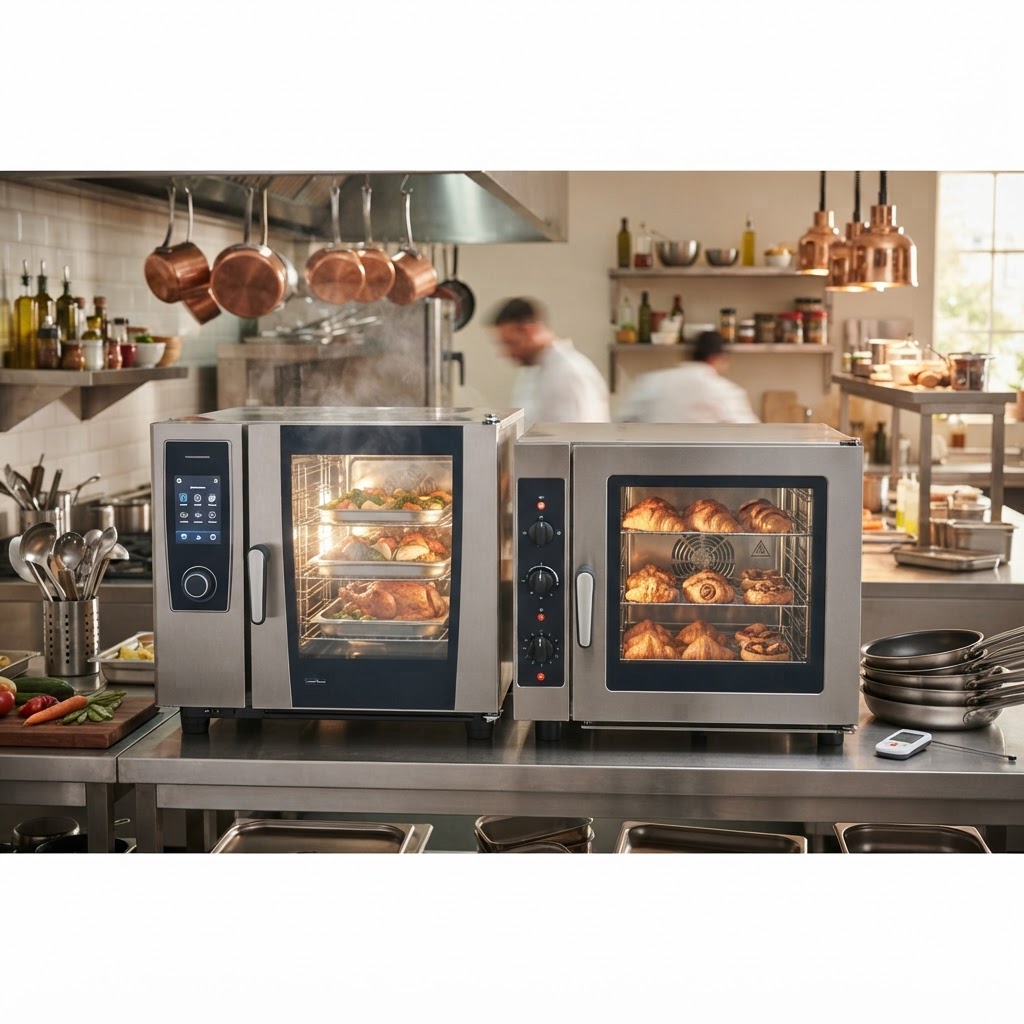
| Steam ovens and combi ovens | Scale and mineral deposits | Specified softening or scale-control treatment, verified against the appliance manual. |
| Dishwashers | Hardness-related deposits and spotting | Softening or other specified pre-treatment, plus correct detergent and rinse-aid dosing. |
| Drinking-water dispensers | Taste, odour and suspended particles | Validated carbon and sediment stages; additional treatment based on test results. |
| Cooking and food preparation | Unwanted taste or source-specific contaminants | Potable supply meeting local rules, with treatment selected for the actual concern. |
Why do ice machines need dedicated filtration?
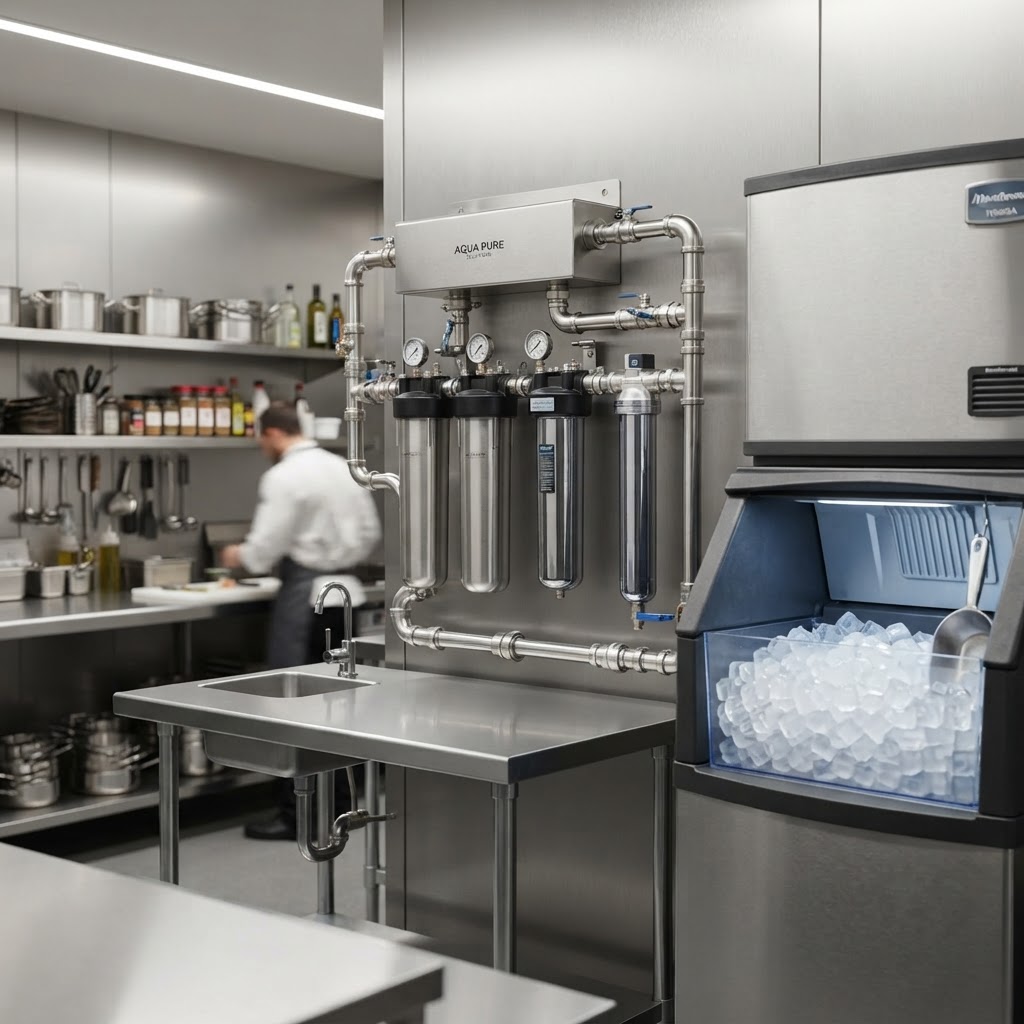
Ice is food and should be handled as such. Water quality can affect taste, clarity, scale formation and machine reliability. A dedicated filter close to the ice maker helps ensure treatment capacity matches the machine’s actual demand. Follow the manufacturer’s recommended cartridge, change interval, inlet pressure and sanitation procedure. Filtration does not replace cleaning the ice bin, sanitising the machine or maintaining safe handling practices.
A busy resort, for example, may see its ice output fall during a high-occupancy period. If scale has built up on the water distribution components, the machine can lose efficiency. A water test, service inspection and correctly sized treatment system can help identify whether hardness, a blocked cartridge, a mechanical fault or several factors are involved.
How should cafés manage water for coffee and beverages?
For coffee, water influences extraction as well as flavour. Excessive hardness can cause scale, while unsuitable alkalinity or mineral content can produce inconsistent cups. Carbon treatment can address chlorine taste, but it does not set the full mineral profile. Specialty coffee operations should use their roaster’s brewing guidance and the espresso-machine manufacturer’s water specifications, then test the treated water periodically.
For post-mix and other beverage equipment, follow the beverage system’s requirements for pressure, flow and water quality. Keep treatment separate from syrup handling, inspect connections and change cartridges on schedule. A consistent supply supports beverage quality, but calibration, sanitation and correct recipe settings remain essential.
How do you size and maintain a commercial filtration system?
System selection should account for flow rate, daily volume, peak demand, inlet pressure, water temperature, connection size and allowable pressure drop. A treatment unit that is too small may restrict service; one that is oversized without a maintenance plan can encourage poor monitoring and unnecessary expense. Consider redundancy or bypass arrangements for critical operations, provided they are designed and controlled safely.
Practical installation and maintenance checklist
- Record source-water test results and the date, location and sampling conditions.
- List every connected appliance and document its water-quality and flow requirements.
- Size treatment for peak simultaneous demand, not only average daily use.
- Install in an accessible, protected location with approved fittings and adequate drainage where needed.
- Label each cartridge with installation date, rated capacity and next service date.
- Track pressure drop, treated-water quality and usage; replace media at the specified limit.
- Sanitise housings and downstream lines as directed, particularly after prolonged shutdowns or service work.
- Keep service records, spare cartridges and escalation contacts available to the facilities team.
- Train staff not to bypass, disconnect or reset a treatment unit without authorisation.
Maintenance intervals depend on water quality and throughput; calendar reminders alone may not be enough. A cartridge’s rated capacity is typically based on defined test conditions, so actual service life can vary. Use pressure gauges, water tests or system indicators where appropriate, and follow the supplier’s instructions.
What regulations and safety requirements should businesses consider?
Drinking-water standards, plumbing codes, backflow rules, product certifications and chemical-use requirements differ by country and sometimes by municipality. A system approved or certified for one market may not meet another jurisdiction’s requirements. In the United States, for example, operators may encounter NSF/ANSI standards and local plumbing codes; other countries use their own national or regional frameworks. These examples are not interchangeable approvals.
Confirm that equipment and treatment claims are appropriate for the installation location, that potable-water connections use approved components, and that any discharge or brine handling meets local rules. If water comes from a private well, source monitoring and treatment obligations may differ from those for a regulated municipal supply. Engage a qualified local water-treatment provider and consult the relevant authority where required. Filtration should support, not replace, required testing, sanitation and food-safety controls.
How can operators choose a reliable water-treatment supplier?
Ask suppliers to explain the basis for their recommendation: test results, target water quality, appliance specifications, expected capacity and maintenance requirements. Request documentation for performance claims, operating costs, replacement media and service availability. Compare the total cost of ownership, including installation, consumables, water use, maintenance visits and potential downtime—not just the purchase price.
For broader purchasing, Horeca 360 offers a product catalogue and contact options for discussing hospitality supply requirements. Operators can also coordinate filtration with their wider food-supply planning to keep equipment, ingredients and service standards aligned.
Frequently Asked Questions
Does a commercial water filter make any water safe to drink?
No. A filter only reduces substances specified for that product under defined conditions. Start with a verified source and water test, choose treatment certified or validated for the identified concern, and meet local drinking-water requirements. If contamination is suspected, seek professional testing and advice rather than relying on a general-purpose cartridge.
Do restaurants need a water softener if they already have a filter?
Not necessarily. Standard sediment and carbon filters do not usually remove calcium and magnesium hardness. A softener may be appropriate if testing shows problematic hardness and equipment specifications call for it. Some businesses instead use point-of-use scale management or other manufacturer-approved treatment.
Is reverse osmosis suitable for every coffee machine?
No. RO can produce water with very low mineral content, which may not suit a machine or desired coffee profile without blending or remineralisation. Check the machine’s water-quality limits, test the treated water and confirm the required mineral balance with the equipment manufacturer or a qualified coffee-water specialist.
How often should commercial filter cartridges be replaced?
Replace cartridges according to the manufacturer’s rated capacity, time limit, monitoring results and site conditions. High sediment loads or heavy use can shorten service life. Keep a service log and investigate changes in pressure, taste or equipment performance rather than waiting for a visible failure.